
For the Birds: The History of PRS Guitars

For decades, the electric guitar world seemed comfortably divided into two camps:
Want sparkling cleans, snappy attack, and effortless playability? Reach for a Fender.
Thick sustain, rich mids, and a carved maple top more your style? Gibson's got you covered.
Few builders saw reason to challenge that formula, let alone convince players they didn't have to choose between the two name brands.
Then came Paul Reed Smith.
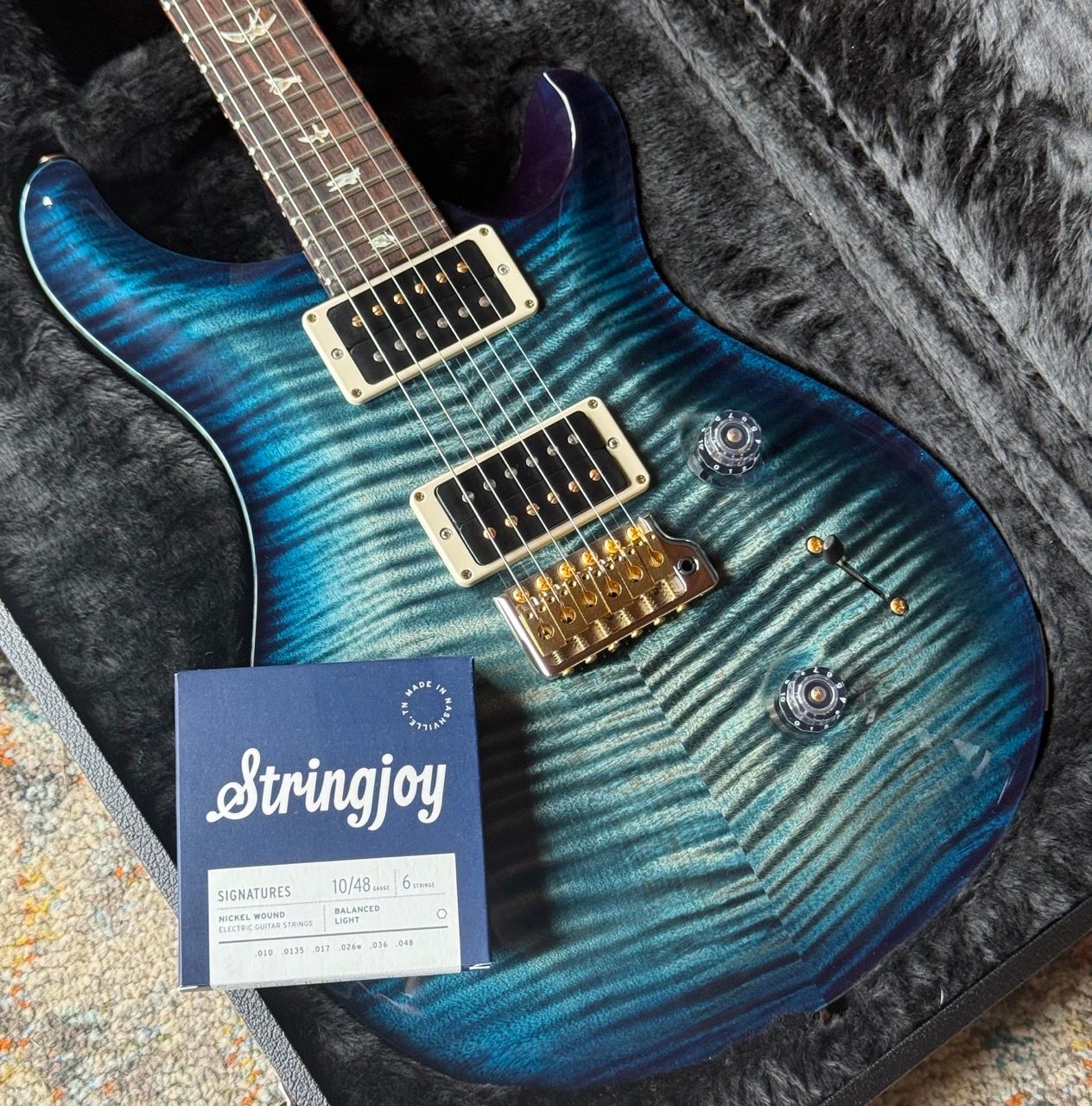
Since its founding in 1985, PRS has grown from a one-man workshop in Maryland into one of the world's premier guitar manufacturers. Along the way, the company has developed a reputation for meticulous craftsmanship, remarkable consistency, and a willingness to question long-held assumptions about what an electric guitar can be.
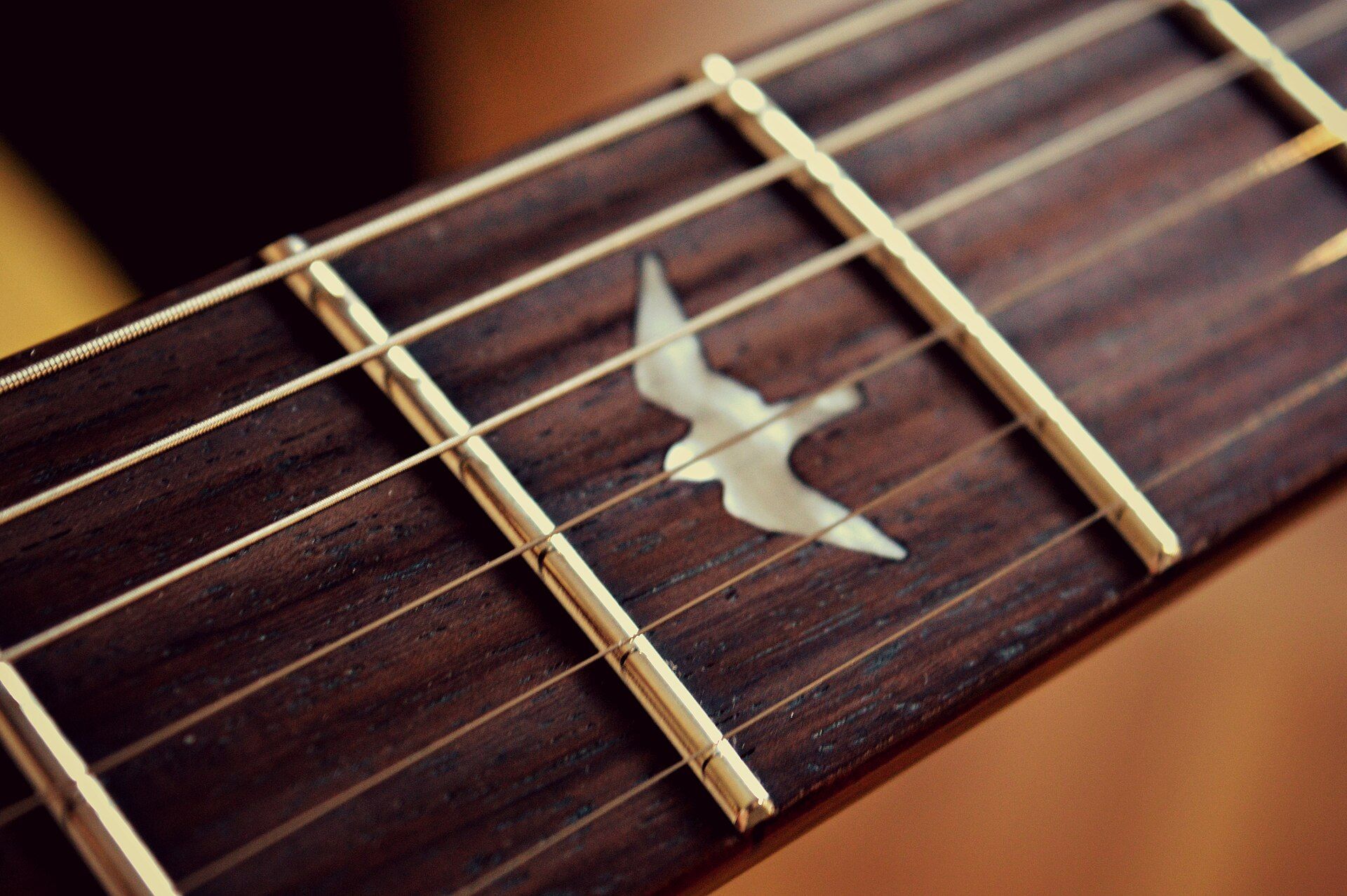
Whether it's the unmistakable bird inlays, violin-inspired carved tops, or flawlessly finished necks, Paul Reed Smith guitars have become instantly recognizable and widely respected by everyone from weekend hobbyists to arena headliners.
The story of PRS guitars history isn't one of lucky breaks or overnight success. It's the result of decades of experimentation, an obsession with detail, and a relentless belief that guitars could always be made better.
PRS Before PRS
Long before his name was synonymous with his brand, Paul Reed Smith was simply a curious guitar player who sought to understand why certain instruments seemed to come alive while others felt uninspiring.
Growing up in Maryland during the 1960s and '70s, Smith became fascinated by the relationship between materials, construction methods, and tone. Rather than accepting that great guitars were happy accidents, he believed exceptional instruments could be built consistently if every detail was carefully considered.
In his college years, Smith began building guitars by hand in a small workshop. Every instrument was an experiment. He studied neck angles, body shapes, bridge designs, pickup placement, hardware, and wood combinations, searching for the ideal balance between resonance, sustain, comfort, and tuning stability.
One idea remained constant throughout those early years: why should players have to choose between the strengths of Fender and Gibson?

Smith admired Gibson's carved maple tops, warm mahogany bodies, and singing sustain. At the same time, he loved Fender's ergonomic contours, bolt-on feel, and effortless upper-fret access. His goal wasn't to imitate either company—it was to combine their greatest qualities into something entirely new.
Taking Guitars Straight to the Pros
Building great guitars was only half the challenge. Convincing musicians to play them was another matter entirely.
Smith became famous for loading his handmade instruments into the trunk of his car and driving to concert venues throughout the East Coast. He waited outside soundchecks, introduced himself to touring guitarists, and politely asked if they would spend a few minutes trying one of his guitars.
Many said yes. (They're guitar nerds just like us, after all!)
Those connections proved invaluable. Professional musicians offered honest feedback, and Smith eagerly incorporated their suggestions into the next instrument he built. More importantly, a growing list of respected players began carrying his guitars onto stages around the world.
Carlos Santana became one of the earliest and most influential believers in Smith's work. Santana's fluid phrasing and vocal-like sustain demanded an instrument capable of remarkable balance and expressiveness, and he immediately connected with Smith's designs. Jazz virtuoso Al Di Meola also became an early supporter, praising the guitars' consistency and precision. Howard Leese of Heart, Peter Frampton (who received the very first PRS with bird inlays!), Ted Nugent, and numerous studio musicians soon followed.
These weren't simply celebrity endorsements, they were proof that Smith's philosophy resonated with serious working musicians.
The Birth of PRS Guitars
By the early 1980s, demand for Smith's instruments had grown beyond what one builder could realistically produce. In 1985, he officially founded PRS Guitars in Annapolis, Maryland.
The timing was bold. The American guitar industry was still recovering from difficult years, and competing against established giants seemed almost impossible. Instead of chasing lower prices or mass production, PRS focused on uncompromising quality.
From the very beginning, every guitar reflected extraordinary attention to detail. Highly figured maple tops were carefully bookmatched to create dramatic visual symmetry. Mahogany bodies were selected for resonance and balance. Neck joints were sculpted for effortless access to the highest frets, while fretwork quickly became one of the company's calling cards.
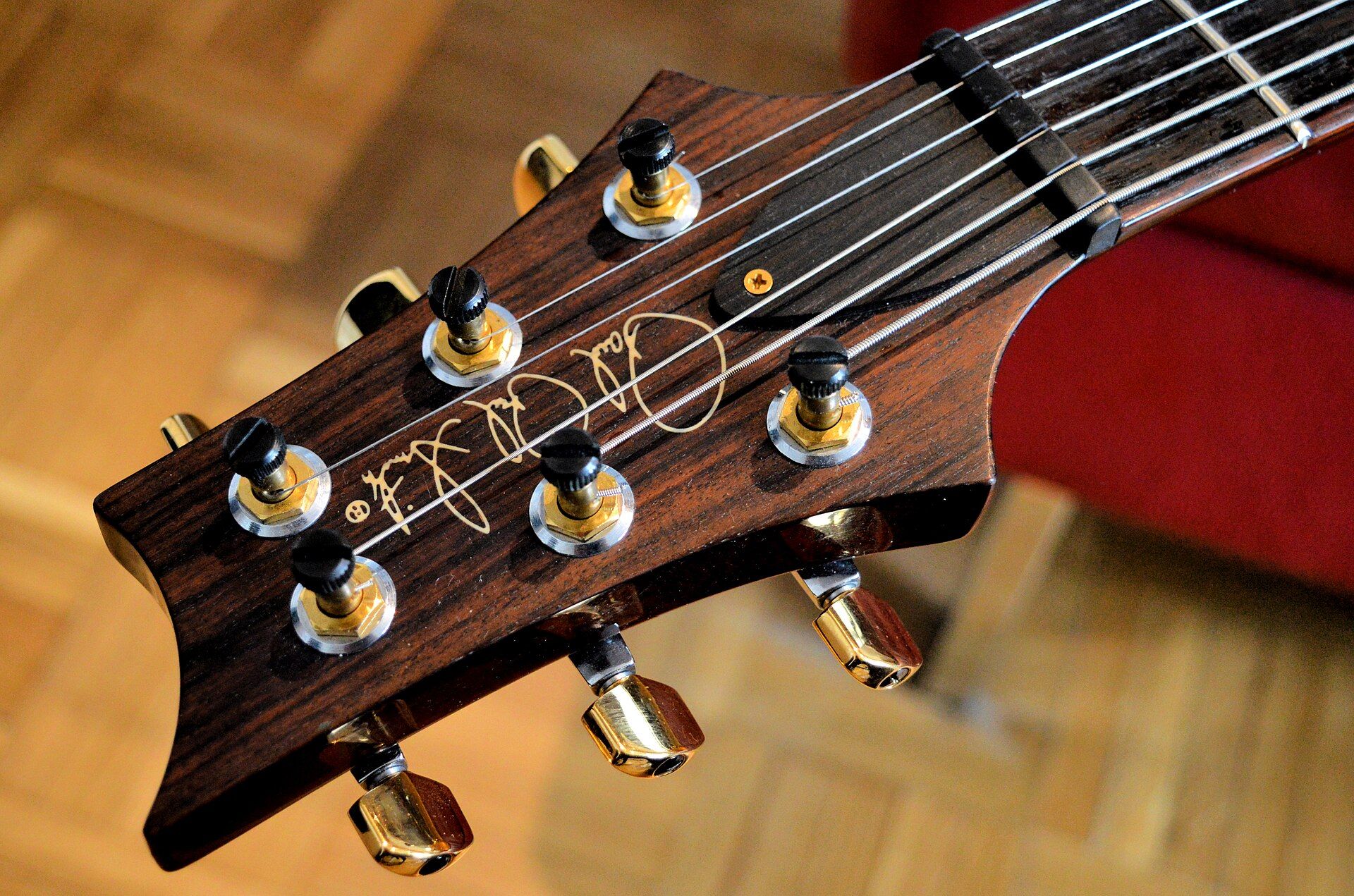
Even cosmetic details served a purpose. The iconic bird inlays, inspired by Smith's mom's passion for birdwatching, gave the guitars a visual identity unlike anything else on the market. Likewise, the distinctive PRS headstock wasn't simply stylish—it improved string alignment across the nut, helping enhance tuning stability.
The company's debut at the 1985 Winter NAMM Show generated immediate attention. Players recognized that these weren't copies of vintage classics; they were thoughtfully engineered instruments designed to solve real-world problems while honoring the traditions that inspired them.
Ted McCarty and the PRS Philosophy
Few relationships influenced the future of PRS more than Paul Reed Smith's friendship with Ted McCarty.
As Gibson's president during the company's celebrated "golden era," McCarty had overseen the development of legendary instruments including the Les Paul, ES-335, Flying V, and Explorer. Rather than viewing Smith as competition, he became a mentor, sharing decades of manufacturing knowledge and encouraging Smith to pursue his own ideas.
Their collaboration reinforced one of PRS's defining philosophies: innovation should respect tradition, not replace it.
Instead of chasing trends, Smith refined nearly every aspect of electric guitar design. Scale length settled at 25 inches—a practical middle ground between Gibson's 24.75-inch scale and Fender's 25.5-inch scale. The patented PRS tremolo balanced smooth operation with exceptional tuning stability, while proprietary pickups evolved through years of listening tests rather than marketing hype.
This obsession with consistency became one of PRS's greatest strengths. Vintage guitars are often celebrated because exceptional examples exist despite inconsistent manufacturing. PRS aimed for something different: every instrument leaving the factory should inspire confidence from the very first chord.
Four Guitars That Defined PRS
PRS Custom 24
No instrument represents PRS better than the PRS Custom 24.
Introduced with the company's launch in 1985, the Custom 24 remains PRS' flagship model nearly four decades later.
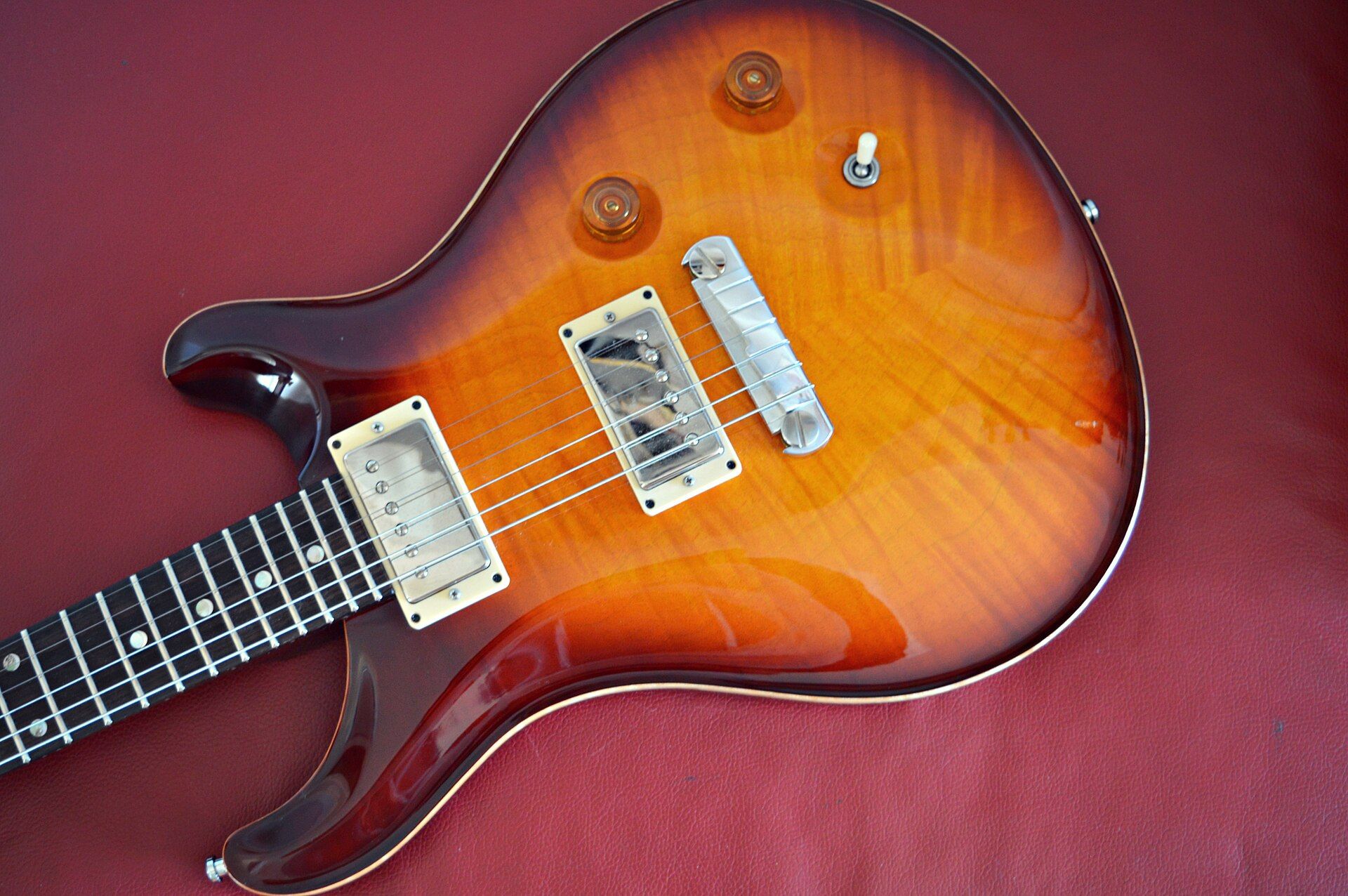
The recipe feels familiar on paper, yet unmistakably distinct in practice. A carved figured maple top sits atop a mahogany body, delivering warmth, sustain, and visual elegance. The 25-inch scale length creates a comfortable middle ground for players coming from either Fender or Gibson backgrounds, while 24 frets provide full two-octave access without sacrificing playability.
The electronics have evolved over the years, but versatility has always remained central to the design: Dual humbuckers paired with coil-splitting options allow the guitar to move comfortably between glassy cleans, classic rock crunch, modern high-gain tones, and everything in between. Combined with the patented PRS tremolo, the Custom 24 quickly earned a reputation as one of the most adaptable professional guitars available.
For countless players, it remains the definitive PRS.
PRS DGT
Few signature guitars have earned the widespread respect of the PRS DGT.
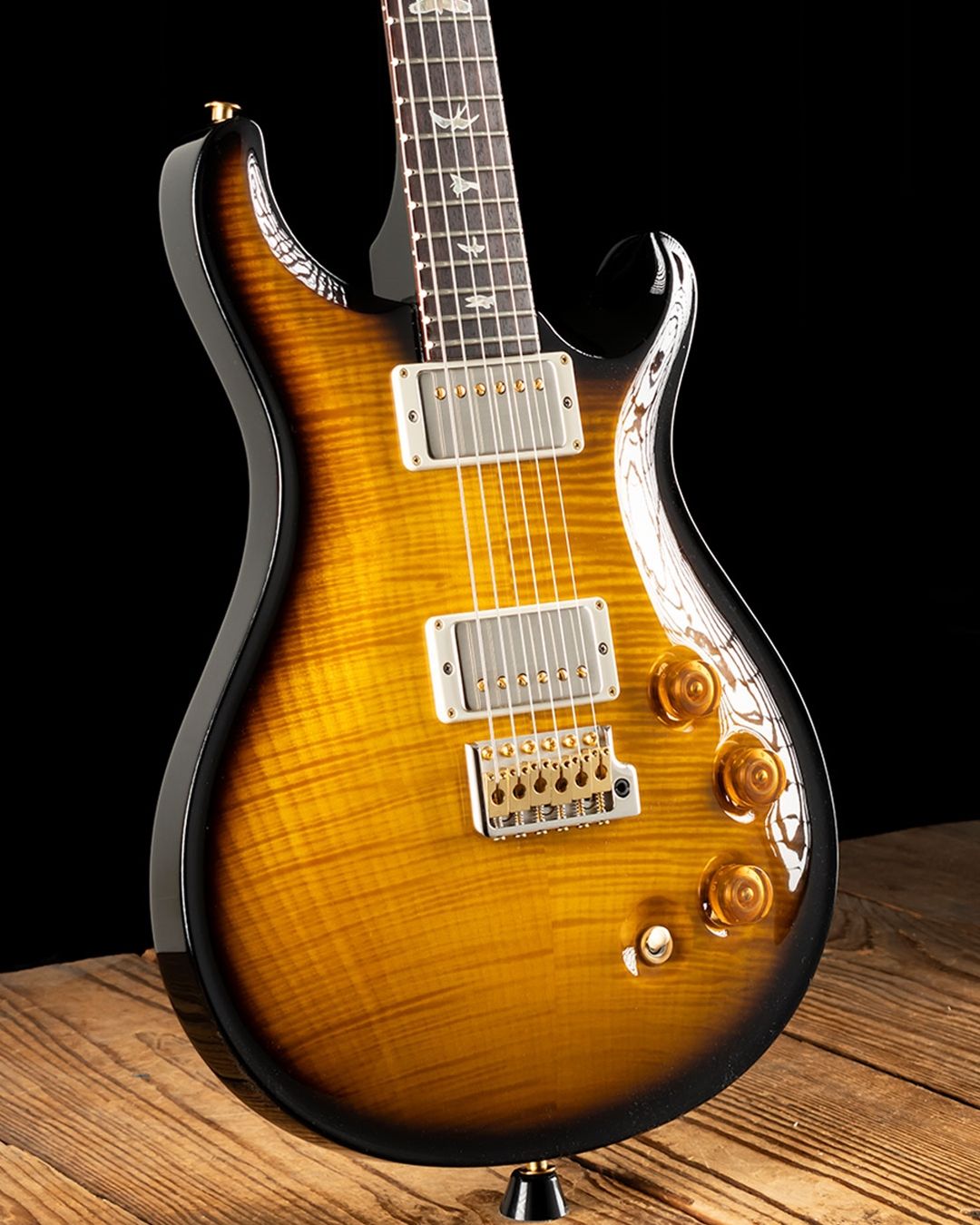
Developed in close collaboration with session ace, solo artist, and longtime PRS ambassador David Grissom, the DG, or David Grissom Trem, is the result of more than 20 years of real-world refinement. Rather than starting from scratch, Grissom and the PRS team took the McCarty platform and reworked nearly every detail to create a guitar that felt broken-in from day one.
The DGT features a slightly thicker mahogany body capped with carved maple, a comfortable "DGT" neck profile, taller frets for effortless bends and vibrato, and the PRS Gen III tremolo for exceptional tuning stability. Its custom-voiced DGT humbuckers are designed for clarity and dynamic response rather than sheer output, making them equally convincing through pristine clean amps and edge-of-breakup tube tones. Unique independent volume controls for each pickup, paired with a master tone and push-pull coil split, provide an unusually broad range of usable sounds without overcomplicating the controls.
What makes the DGT especially significant is how well it embodies the PRS philosophy. Every feature exists because it solved a practical problem encountered on stage or in the studio, not because it looked good on a spec sheet. The result is an instrument that feels refined, versatile, and unmistakably musical, qualities that have made the DGT one of the most beloved models in the PRS lineup, even among players who have never heard of David Grissom.
PRS McCarty
Released in the mid-1990s, the PRS McCarty paid tribute to the man whose guidance helped shape the company itself.
Designed with vintage sensibilities in mind, the McCarty embraces slightly thicker body dimensions, traditional hardware, and lower-output pickups that prioritize nuance over sheer power. Instead of chasing aggressive modern tones, it excels at revealing the natural voice of the guitar and the player's touch.
Clean passages bloom with warmth and complexity, while overdriven sounds retain exceptional note separation and dynamic response. It's a guitar that rewards subtlety, making it a favorite among blues, classic rock, jazz, and Americana players.
In many ways, the McCarty represents the philosophical heart of PRS: honoring the past without simply recreating it.
PRS Silver Sky
When PRS announced the PRS Silver Sky in collaboration with modern guitar hero John Mayer in 2018, reactions were immediate... and intense.
Working with Mayer, best known as a Strat player, gave PRS an opportunity to reinterpret he classic single-coil formula. It essentially amounted to an entirely new direction for the company. The result? The Silver Sky very quickly became one of the most successful artist collaborations in modern guitar history.
Rather than copying a vintage instrument outright, Mayer and the PRS team spent years refining countless details, including pickup voicing, neck carve, fretwire, bridge geometry, radius, and hardware. The result feels instantly familiar while delivering the consistency and precision that define modern PRS electric guitars.
Its success introduced thousands of players to the PRS brand, proving that the company's design philosophy extends beyond the humbucker.

A Company That Never Stopped Growing
As PRS matured, it continued expanding without losing sight of its core principles.
The introduction of the import SE Series made high-quality PRS instruments accessible to a much broader audience while maintaining rigorous quality standards.
The Maryland-built S2 line bridged the gap between imported and Core models, while the ultra-exclusive Private Stock program showcased some of the most extraordinary craftsmanship found anywhere in the guitar world.
Beyond guitars, PRS has expanded into amplifiers, pedals, and acoustic instruments, applying the same thoughtful engineering that defined its earliest electric models.
Perhaps more importantly, the artist roster has continued to grow. Carlos Santana remains closely associated with the brand, while musicians including Mark Tremonti, Myles Kennedy, Orianthi, Dustie Waring, and Mark Holcomb have all helped demonstrate the remarkable versatility of the platform.
From jazz and country to progressive metal and pop, PRS guitars have become fixtures across virtually every genre.
Strings for Your PRS
Some of our favorite Stringjoy pairings for PRS models

Stringjoy 10-48 Balanced Light Gauge Signatures - Nickel Wound Electric Guitar Strings

Stringjoy 9.5-46 Balanced Super Light Plus Gauge Orbiters - Coated Nickel Electric Guitar Strings

Stringjoy 11-50 Balanced Medium Gauge Orbiters - Coated Nickel Electric Guitar Strings

Stringjoy 10-46 Classic Light Gauge Broadways - Pure Nickel Electric Guitar Strings

Stringjoy 9.5-48 Husky Super Light Plus Gauge Signatures - Nickel Wound Electric Guitar Strings

Stringjoy 2.0mm Dagger Acrylic Picks - 2 Pack

Stringjoy 10.5-50 Balanced Light Plus Gauge Orbiters - Coated Nickel Electric Guitar Strings
PRS Marches On
Forty years after its founding, PRS occupies a unique place in the guitar world. It isn't simply another historic manufacturer, nor is it content to be viewed as an alternative to the industry's older giants. Instead, PRS has become a benchmark for modern craftsmanship—proof that innovation and tradition don't have to exist in opposition.
Paul Reed Smith's original vision was surprisingly straightforward: build guitars that combine the best ideas of the past with the precision and consistency players expect today. That philosophy continues to shape every instrument the company produces, from affordable SE models to breathtaking Private Stock masterpieces.
Whether you're captivated by the versatility of the PRS Custom 24, the vintage-inspired warmth of the PRS McCarty, the articulate snap of the PRS CE 24, or the modern classic feel of the PRS Silver Sky, every PRS reflects the same relentless pursuit of excellence that began in a small Maryland workshop decades ago.
For players searching for an instrument that blends beauty, innovation, and uncompromising performance, Paul Reed Smith guitars remain among the finest examples of what modern guitar building can achieve.
Other Posts you may like


Guitar Strings Order: How the Guitar is Tuned and Why

Two Handed Tapping: Our Top 8 Tappers of All Time
Which Guitar Strings Wear Your Fret Wire Down More?
What is Nashville Tuning? Its History, Best Guitar Strings & Uses
Guitar Scale Length Explained: String Tension & Playability
What Guitar Strings I Used To Play...
0 Responses
Leave a Reply
Your email address will not be published. Required fields are marked *


